



How to Choose the Right Onion Supplier in India: Grades, Quality Standards & Export Checklist (2026 Guide)
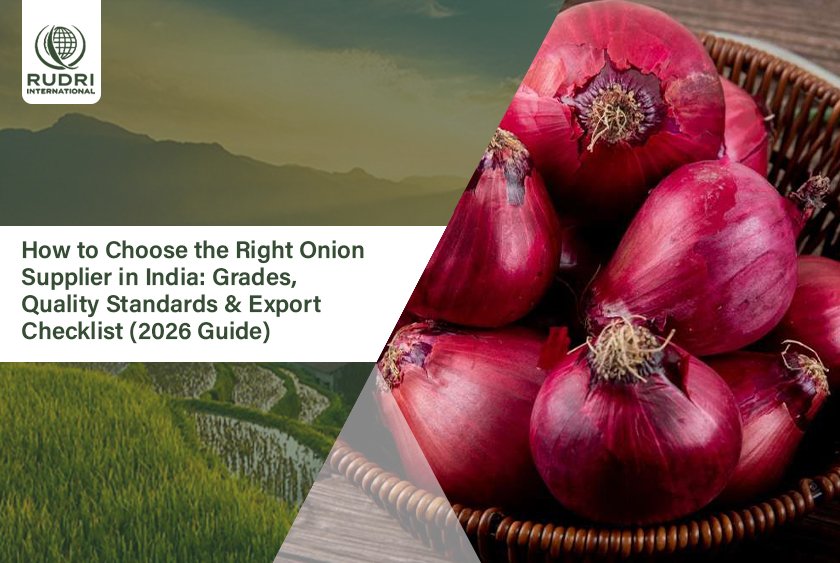
If you’ve ever sourced onions from India, you already know the drill: when the supply is good, it’s excellent — steady volumes, strong quality, competitive pricing. But when things go wrong, they go really wrong. Sudden price spikes, inconsistent grading, delayed shipments, last-minute quality discrepancies… it can feel like a gamble.
For importers, wholesale distributors, supermarkets, food processors, and procurement teams, choosing the right onion supplier in India is no longer about getting the cheapest quote. It’s about securing reliable, compliant, traceable, season-steady supply.
This guide walks you through everything you should expect from trusted wholesale onion suppliers and reputable onion exporters in India — from grading systems and quality standards to documentation, inspection, and contract essentials.
India’s Onion Landscape: Why the Market Matters
Why India matters for global onion trade
India remains one of the world’s largest producers and exporters of onions, with strong demand from Asia, the Middle East, Africa, and several European markets. Consistent volume, a wide variety of onions, and competitive pricing make the country a preferred sourcing hub.
Seasonality & production cycles
Two major cycles define India’s onion availability:
- Rabi (summer onions) — longer shelf life, ideal for exports.
- Kharif (monsoon onions) — shorter shelf life but high domestic consumption.
Seasonal shifts influence moisture levels, firmness, and pricing — meaning buyers should align contracts with the season that matches their quality goals.
Major growing states & varieties
Maharashtra, Gujarat, Karnataka, Madhya Pradesh, and Rajasthan together dominate onion production. Popular varieties include red onions (export favorite), white onions (food processing), and pink onions (regional specialty markets). Understanding varietal traits helps ensure you match product to purpose.
Understanding Onion Grades & What They Mean for Buyers
Common grading criteria
Reputation hinges on consistent grading. Expect classifications based on:
- Size (measured in mm)
- Diameter & weight per bulb
- Peel quality & color uniformity
- Firmness & moisture
Cosmetic vs. functional grading
Retail buyers prioritize appearance; food processors focus on internal defects, dry matter, and microbial stability. Clarify which one matters more for your market.
Varietal differences
Red onions deliver excellent shelf life and strong flavor, white onions offer clean pungency for processing, and pink onions serve niche markets. Each behaves differently in storage.
Export vs. domestic wholesale grades
Export grades are tighter, with lower tolerance for sprouting, mold, or size variation. Most wholesale onion suppliers use 45–75 mm categories, while premium export lots skew toward narrow size bands.
Quality Standards, Certifications & Lab Tests Buyers Must Demand
Regulatory standards to check
Reputable onion exporters in India must comply with:
- APEDA export quality norms
- FSSAI food-safety requirements
- Customs and plant quarantine regulations
Certifications
Consider suppliers with:
- HACCP
- ISO 22000
- GLOBALG.A.P.
- Organic certifications (if required)
These aren’t just badges — they indicate structured processes behind the scenes.
Lab tests & parameters
High-integrity suppliers provide batch-wise testing for:
- Pesticide residues
- Microbial load
- Moisture content
- Foreign matter
- Storage suitability indicators
Traceability documentation
Full trace-back from farm to packhouse shows professionalism and reduces recall risk.
How to Evaluate an Onion Supplier — Diligence Checklist
Pro Tip: While the points below are critical for onions, reliable sourcing requires a holistic approach. We highly recommend cross-referencing your potential partner against our broader 12-Point Guide on How to Choose a Reliable Vegetable Exporter to ensure you haven't missed any general financial or regulatory red flags.
Commercial capabilities
A solid onion supplier in India should confidently state capacity, MOQ, and season-long availability. Ask how they manage sudden demand surges.
Quality controls
Look for dedicated sorting lines, grading belts, and in-house QC labs with moisture and firmness testing tools.
Cold chain & post-harvest handling
Curing, ventilation, and controlled-humidity storage directly affect shelf life.
Logistics & delivery capability
Ask about ports served, weekly shipment frequency, and average lead times.
Financial & legal checks
Verify GST, IEC, company registration, and client references.
Sustainability & compliance
Responsible pesticide use, labor standards, and transparent sourcing matter increasingly to global buyers.
Pricing & Contract Terms — Minimizing Risk
Common pricing structures
Most contracts follow FOB, CIF, or ex-works models. Clarify inclusions upfront — especially packing, certification fees, and inland transport.
Payment terms
LCs, bank guarantees, and phased payments reduce counterparty risk.
MOQs, delivery windows & penalties
Define expectations clearly to avoid disagreements later.
Seasonality clauses
Include flexibility for export restrictions or crop failures — these events can genuinely disrupt the best suppliers.
Packaging, Labelling & Handling Requirements
Export packaging
Mesh bags (5 kg, 10 kg, 25 kg, 50 kg), ventilated cartons, and palletized loads are common. Request stitching quality and bag strength verification.
Label requirements
Buyer details, product type, grade, country of origin, and batch identification help maintain traceability.
Fumigation & storage
Ensure your market’s fumigation and phytosanitary requirements are understood and adhered to.
Export Checklist — Documents Every Buyer Should Verify
Mandatory documents include:
- IEC
- Commercial invoice
- Packing list
- Bill of lading or airway bill
- Certificate of Origin
- Phytosanitary certificate
- Fumigation certificate (if required)
- FSSAI documentation for food-safety clearance
- Insurance certificate
- Contract or purchase order with clear Incoterms
Pre-shipment inspection
SGS, Intertek, or accredited local inspectors can verify quality and packing before dispatch.
Sampling & Inspection Protocol
Build a structured sampling plan
Use representative lots from every pallet or bag cluster to avoid cherry-picked samples.
Arrival inspection
Check firmness, peel integrity, moisture, odor, mold, and sprouting.
Dispute resolution
Agree on tolerances and third-party arbitration before signing the contract.
Risk Factors to Watch & Mitigation Strategies
- Price volatility from seasonal swings
- Sudden government export limits
- Weather disruptions affecting crop yield
- Logistics bottlenecks and currency fluctuations
Diversified sourcing, buffer stocks, forward contracts, and continuous market monitoring help reduce exposure.
Technology, Traceability & Value-Added Services
Tech signals of a reliable supplier
ERP-driven inventory tracking, GPS-enabled logistics visibility, and digital documentation are green flags.
Value-added services
Sorting, size-grading, private-label packaging, and moisture-controlled storage add real commercial value.
Why traceability matters
It shortens investigation time during quality complaints and protects brand credibility.
Pricing Benchmarks & Negotiation Tips
- Understand cost drivers: harvest yield, storage costs, labor, transport.
- Negotiate around lead time, seasonal commitments, long-term contracts, and payment security.
- Avoid aggressive price squeezing — it often results in compromised quality.
Quick Buyer Checklist
- Pre-qualify suppliers based on certifications, capacity, and QC.
- Inspect packing, moisture, firmness, and size uniformity during sampling.
- Lock contract terms with clear tolerances, responsibilities, and documents required.
Mini Case Study: How Smart Sourcing Solved Supply Instability
A Middle Eastern importer struggling with inconsistent supply switched to multi-state sourcing in India with third-party QC at dispatch. By aligning shipments with Rabi-season availability and enforcing tighter grading norms, they reduced spoilage and stabilized annual procurement costs. The shift also extended shelf life during transit — a win that came purely from structured supplier selection.
Conclusion
Choosing the right onion supplier in India is ultimately about reducing uncertainty. Focus on strong certifications, season-aware sourcing, clear inspection protocols, airtight documentation, and suppliers who invest in traceability and quality systems. Reliable wholesale onion suppliers, fresh onion suppliers, and experienced onion exporters in India consistently show operational discipline, not flashy pricing.
If you’re looking for a sourcing partner that blends deep farm networks with rigorous lab testing and seamless global compliance, Rudri International has built its reputation on exactly that — audited sourcing, 12+ quality checks per batch, AI-driven logistics, and dependable support from India to your destination port.
When you prioritize structured supplier evaluation, onion sourcing becomes predictable, profitable, and sustainable — just the way a long-term procurement strategy should be. Connect with our team to learn more!
Frequently Asked Questions - FAQs (Sourcing Onions from India)
Q1: What is the difference between Rabi and Kharif onions, and which is better for export?
A: This is the most critical factor for importers. Rabi onions (harvested March–May) are the gold standard for export because they have lower moisture content, ensuring a longer shelf life and better durability during long transit. Kharif onions (harvested later in the year) have higher moisture content; while they are excellent for immediate consumption, they have a shorter shelf life and are riskier for long-distance shipping unless processed immediately.
Q2: What are the standard grading sizes for export-quality Indian onions?
A: Reputable wholesale onion suppliers typically grade based on bulb diameter. The standard export grades are 45mm–60mm (often for Bangladesh/Southeast Asia) and 55mm+, 60mm+, or 70mm+ (for Middle East and European markets). However, premium suppliers like Rudri International can customize grading to narrower bands (e.g., strictly 50-70mm) to ensure uniformity on retail shelves.
Q3: How do I ensure the onions won’t spoil during a 3-week sea shipment?
A: Preventing spoilage requires a three-step protocol:
- Sourcing: Buying fully cured Rabi crop (summer onions) with low water content.
- Packing: Using ventilated mesh bags (not closed sacks) to allow airflow.
- Container: Using "High Cube" refrigerated containers or well-ventilated dry containers depending on the season and distance. Always ask your supplier for a Phytosanitary Certificate and a pre-shipment inspection report (like SGS) to verify the "dry matter" and firmness before the container seals.
Q4: What certifications should I look for in a reliable Indian onion exporter?
A: Do not rely on price alone. A compliant exporter must hold a valid IEC (Import Export Code) and registration with APEDA (Agricultural and Processed Food Products Export Development Authority). For higher security and food safety, look for suppliers who offer GlobalG.A.P., HACCP, or ISO 22000 certifications, which guarantee that the onions meet international pesticide residue and hygiene standards.
Q5: Why do onion prices in India fluctuate so suddenly?
A: Indian onion prices are sensitive to weather disruptions (unseasonal rains damaging the crop) and domestic demand. If local prices spike, the government may impose Minimum Export Prices (MEP) or export bans to stabilize the local market. To mitigate this risk, experienced buyers sign forward contracts with established exporters who maintain buffer stocks and have multi-state sourcing capabilities to navigate regional shortages.
Q6: Can I get both Red and White onions in the same shipment?
A: Yes, many large-scale exporters can consolidate mixed loads, though Red Onions (famous for pungency and shelf life) and White Onions (preferred for dehydration and processing) are often grown in different specific regions. Discuss your "Mixed Load" requirements early in the negotiation to ensure the supplier has the logistics capability to aggregate different varieties into one fresh consignment.