



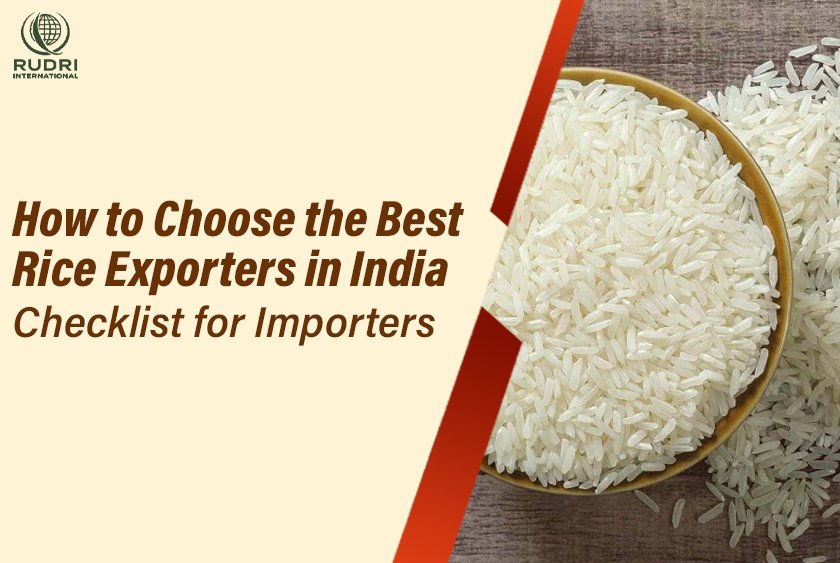
How to Choose the Best Rice Exporters in India – Checklist for Importers
If you’ve ever tried sourcing rice from India, you already know the drill: ten suppliers promise “premium quality,” five send half-decent samples, three vanish midway through documentation, and one finally ships a batch that’s… well, not what you ordered.
That’s the hidden truth behind global rice trade. India might account for 40% of the world’s rice exports (FAO, 2024)—but not every exporter is built the same. And with demand rising across 150+ countries for both Basmati and non-Basmati rice, choosing the right partner becomes a business decision that directly affects your profit margins, brand reputation, and customer retention.
This guide breaks down exactly how to identify the best rice exporters in India, the benchmarks you should check, red flags to avoid, and how to confidently verify authenticity before signing a contract.
Understanding India’s Rice Export Landscape
India’s Basmati Rice Leadership
India exports over 4 million tonnes of Basmati rice annually. Importers prefer Indian Basmati because of its unmatched aroma, long slender grains, and signature elongation after cooking. No other region replicates this combination.
This is why Basmati rice suppliers in India are considered premium partners in markets like the Middle East, Europe, and select Asian regions.
Non-Basmati Rice Momentum
Non-Basmati is India’s volume powerhouse — 17+ million tonnes exported in recent years.
Parboiled, long-grain, broken rice, Sona Masoori, IR64… these varieties feed millions across Africa, Southeast Asia, and the Middle East.
What drives demand?
- Affordability
- Reliable supply
- Consistency in taste and texture
- A large pool of non basmati rice exporters offering bulk-ready shipments
Where India Ships Most
- Middle East → Basmati-focused
- West Africa → Parboiled & broken rice
- Europe/US → Premium long-grain + organic categories
If you’re new to the market, aligning your product specs with regional demand saves you both time and negotiation cycles.
Checklist: How to Choose the Best Rice Exporters in India
This is your importer’s roadmap — the difference between costly mistakes and smooth, profitable trade.
1. Exporter Certifications & Compliance
The best rice exporters in India are always transparent about documentation. Your baseline list:
- APEDA registration (mandatory for agricultural exports)
- FSSAI
- HACCP
- ISO standards
- Phytosanitary certificates
These certifications signal credibility, but more importantly, they ensure that the rice meets international safety and quality requirements.
2. Product Variety & Quality Standards
A trustworthy exporter offers a complete portfolio:
- Basmati
- Non-Basmati
- Sella/Parboiled
- Long-grain
- Broken
- Organic options
Quality markers to verify:
- Grain length
- Moisture percentage (ideal: 12–13%)
- Purity level
- Polishing grade
- Aroma retention (for Basmati)
If a supplier avoids sharing specs, avoid them.
3. Milling & Processing Infrastructure
Modern mills mean consistent output.
Look for:
- Color sorters
- Grading lines
- Automated polishing systems
- Dust-free packaging units
High-end infrastructure is often what separates top-tier suppliers from mediocre ones.
4. Sourcing Capability & Farm Tie-Ups
The strongest Basmati rice exporters in India work directly with farmers. Why?
- Better purity standards
- Reduced adulteration risks
- More predictable supply
- Farm-level traceability
A supplier who cannot clarify their sourcing chain is a risk.
5. Export Performance & Track Record
Ask for:
- Annual shipment volumes
- Key export regions
- Years of experience
- Repeat client ratio
Consistent exporters don’t hesitate to share references.
6. Packaging Standards
Poor packaging can ruin an entire shipment.
Check if they offer:
- 1kg–50kg bags
- PP/jute/woven bags
- Private labeling
- Moisture-proof liners
High-quality packaging matters even more for long-haul destinations.
7. Transparent Pricing & Cost Structure
Your cost evaluation should compare:
- FOB vs CIF rates
- Port handling fees
- Inland transport charges
- Export documentation fees
Many importers fall for unrealistically low quotes — only to face hidden charges later.
Top rice exporting companies in India always share a transparent cost breakdown.
8. Logistics Expertise
Experienced exporters know how to move cargo efficiently.
Look for:
- On-time dispatch history
- Knowledge of the right ports (Kandla, Mundra, Chennai, Vizag)
- Strong relations with freight forwarders
- Real-time shipment updates
A good logistics partner saves you weeks — sometimes months — of delays.
9. Communication & Buyer Support
Fast response = reliable exporter.
Unclear replies, inconsistent documentation, or short one-line messages are huge red flags.
The best suppliers assign a dedicated export coordinator who handles:
- PI
- Packaging proofs
- Lab certificates
- Customs documentation
10. Sample Testing & Independent Verification
Never finalize an exporter without testing samples.
Key tests include:
- Moisture content
- Broken percentage
- Contamination check
- Color sorting accuracy
- Aflatoxin screening
Serious exporters don’t hesitate to provide sample quantity and COA reports.
Basmati vs Non-Basmati: How Supplier Selection Varies
Basmati supplier checks
- Aroma strength
- Grain length (preferably 8.3mm+)
- Elongation ratio
- Aging (1–2 years preferred)
Non-Basmati supplier checks
- Texture uniformity
- Grain damage %
- Broken ratio
- Parboiled consistency
Price variation is sharper in Basmati. Non-Basmati focuses more on volume and shipping reliability.
Red Flags Importers Should Avoid
- Unrealistically low market prices
- No APEDA registration
- Zero sample support
- Delayed communication
- Quotes without quality specs
- No physical mill or sourcing verification
One major red flag: suppliers who change specs after the PI. Walk away.
Why India Remains the World’s Top Choice
India’s strength comes from:
- Vast agricultural base
- Advanced milling technology
- Competitive pricing
- Skilled millers
- A massive exporter network
- Long-term credibility of the best rice supplier in India
No other market offers this blend of volume, quality, and consistency.
Your Reliable Source — A Trusted Supplier for Importers
If you want a benchmark of what a dependable exporter looks like, Rudri International is a strong example.
Here’s why importers across 12+ countries rely on them:
- Farm-level sourcing audits: They personally vet farms and soil conditions.
- Lab verification (12+ quality checks): Moisture, aflatoxin, purity — all certified.
- AI-driven logistics routing: Air/sea optimization with real-time tracking.
- Global compliance expertise: FDA, FSSAI, phytosanitary, COA — everything handled.
- 850+ buyers worldwide: Their track record speaks for itself.
If you’re evaluating potential suppliers, this is the kind of operational transparency you should expect.
Final Buyer’s Checklist (Quick Recap)
- Check certifications
- Verify sourcing
- Evaluate product portfolio
- Inspect milling infrastructure
- Compare pricing transparently
- Study export track record
- Review sample quality
- Assess packaging options
- Validate logistics capability
- Communicate expectations clearly
Follow this checklist, and you’ll confidently identify the best rice exporters in India — without second-guessing your decisions.
Before You Start Negotiating…
Take a moment to cross-check every supplier against this checklist — certifications, sourcing clarity, sample accuracy, packaging quality, and logistics discipline. These are the filters that separate dependable export partners from risky ones.
And if you want a proven starting point instead of sifting through dozens of suppliers, Rudri International is a solid reference model. Their farm-level audits, 12+ lab tests, and end-to-end compliance support (FDA, FSSAI, phytosanitary) make the import process far smoother than what most suppliers offer. With 850+ buyers across 12+ countries, their consistency speaks for itself.